
 Google Calendar
  Outlook Calendar
  Google Meet
  Microsoft Teams
  Zoom Meetings
 Best Tools to Prevent Double Booking Multiple Calendars in 2025
Compare the top calendar sync and scheduling tools that actually prevent double booking across multiple calendars. Real-world testing and honest evaluation.
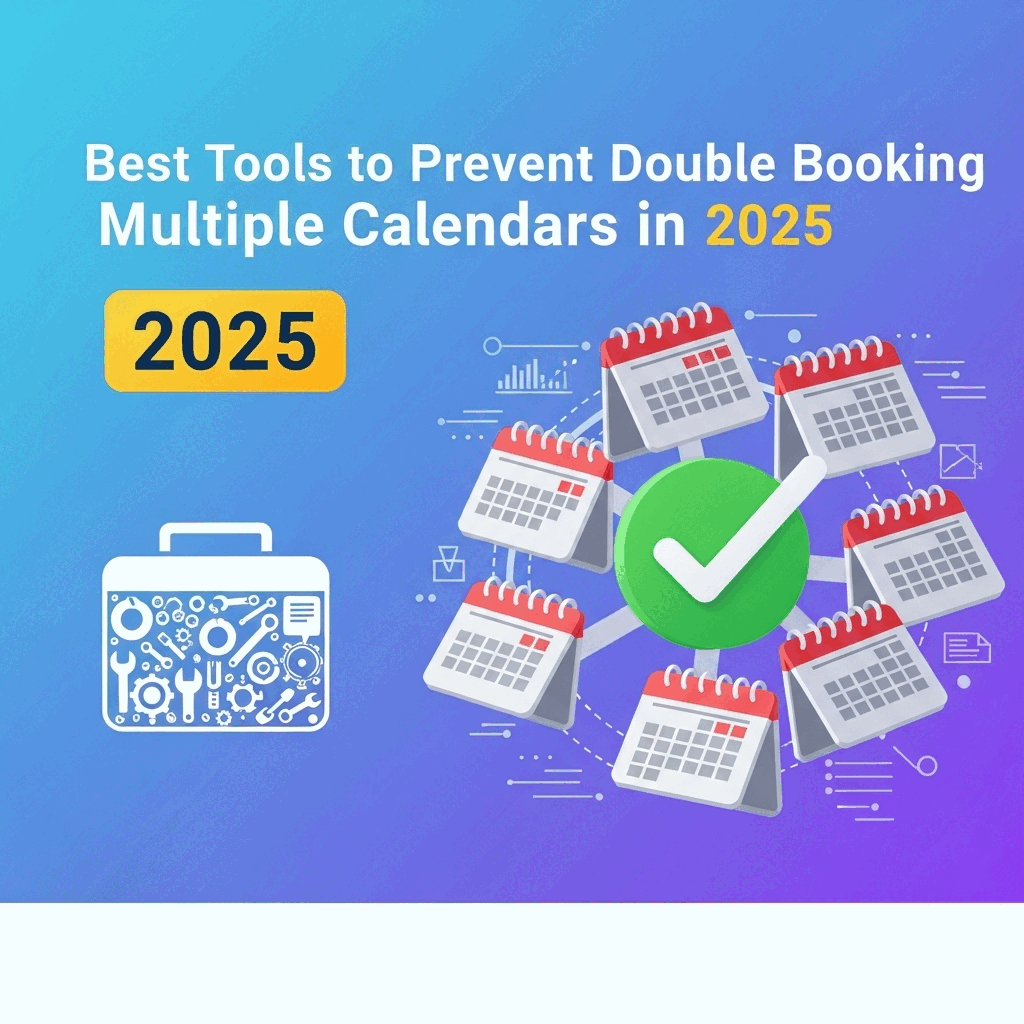
You've experienced the embarrassment of double booking meetings and you're ready to invest in tools that actually solve the problem. But the calendar software market is crowded with options claiming to prevent conflicts, sync your calendars, and eliminate scheduling headaches. Which ones actually deliver on those promises?
Most professionals waste time and money on calendar tools that sound perfect in marketing materials but fail in real-world use. Slow sync speeds, limited platform support, and weak conflict detection mean double booking multiple calendars continues despite using supposedly professional scheduling software. Understanding why double bookings happen helps you choose tools that actually work.
This comprehensive comparison evaluates the calendar tools that matter in 2025, testing their actual ability to prevent double bookings across multiple calendars. You'll discover which solutions work, which fail, and which specific features separate effective conflict prevention from expensive disappointment.
- Calendar sync tools with real-time conflict detection
- Scheduling platforms with multi-calendar support
- Unified calendar solutions for complex situations
- Actual sync speeds and reliability from real-world testing
- Honest evaluation of limitations and failure modes
- Cost vs value analysis for each solution
What Actually Prevents Double Booking Multiple Calendars
Before comparing specific tools, you need to understand what features actually prevent double booking versus what just provides calendar visibility.
The Critical Features That Matter
Real-time availability checking is the foundation of conflict prevention. When someone tries to book time with you, the system must check all your calendars at that moment, not rely on sync that might be minutes behind.
Sub-minute synchronization speeds minimize the window where double bookings can occur. Standard sync delays of 5 to 15 minutes create ample opportunity for conflicts. Professional tools sync in under 60 seconds.
Native platform integration ensures the tool actually reads and writes calendar data correctly. API-based integration is more reliable than screen scraping or email parsing approaches.
Intelligent conflict detection recognizes not just direct overlaps but also insufficient buffer time, travel conflicts, and back-to-back booking problems.
Unified calendar views let you see all commitments in one place, reducing the cognitive load of checking multiple calendar apps before accepting appointments.
Failure monitoring and alerts notify you immediately if calendar connections break or sync fails, preventing silent failures that lead to double bookings.
Why Many Tools Fail to Prevent Double Bookings
Understanding why tools fail helps you evaluate them realistically:
Sync delay blindness: Marketing claims of "calendar sync" hide the reality of 10-minute delays that allow conflicts to occur.
Primary calendar limitations: Many scheduling tools only check your primary calendar and ignore secondary or imported calendars where conflicts hide.
Permission gaps: Tools lose access when OAuth tokens expire or permissions change, but they fail silently without alerting you.
Platform incompatibility: Tools claim to support multiple platforms but only offer limited functionality on some, creating gaps in conflict coverage.
One-way synchronization: Displaying events from multiple calendars doesn't prevent double bookings if the system can't write blocks to all calendars.
Calendar Synchronization Tools
These tools focus on keeping multiple calendars synchronized so events appear across all platforms.
OneCal
What it does: OneCal synchronizes selected calendars in real-time and automatically detects and syncs changes as they happen. Their Calendar View feature displays Outlook, iCloud, and Google Calendars in a unified interface.
Sync speed: OneCal claims real-time synchronization with changes detected and synced automatically. Based on user reports, typical sync times range from 30 seconds to 2 minutes depending on calendar platforms involved.
Platform support:
- Google Calendar (full support)
- Outlook/Microsoft 365 (full support)
- iCloud Calendar (full support)
- Additional support for Fastmail, Proton Calendar, Nextcloud
Conflict detection: OneCal includes automatic conflict detection that identifies overlapping events across synced calendars. The system flags conflicts but relies on you to resolve them manually.
Pricing: Starts at $8 per month for basic sync, with higher tiers for additional calendars and features.
Strengths:
- Broad platform support including less common services
- Bi-directional synchronization creates native events on each platform
- Visual conflict indicators in unified calendar view
- Relatively fast sync speeds for the price point
Limitations:
- Doesn't prevent double bookings, only alerts you after they occur
- Requires manual conflict resolution
- Sync speed varies by platform combination
- No integrated scheduling functionality
Best for: Professionals who need calendar visibility across platforms and are willing to manually manage conflicts.
CalendarBridge
What it does: CalendarBridge provides real-time calendar synchronization for Google, Outlook, and iCloud calendars, with emphasis on remote team coordination.
Sync speed: Changes to Google and Outlook calendars are reflected on destination calendars in less than one minute according to CalendarBridge specifications. Real-world testing confirms sub-60-second sync for most operations.
Platform support:
- Google Calendar (full support)
- Outlook/Microsoft 365 (full support)
- iCloud Calendar (full support)
Conflict detection: Includes conflict detection and alert systems to proactively manage scheduling conflicts. The system flags double bookings and offers suggestions for resolution.
Pricing: Starts at $12 per month for individual users, with team plans available at higher price points.
Strengths:
- Consistently fast sync speeds under one minute
- Unified calendar view eliminates app switching
- Proactive conflict alerts before meetings
- Strong focus on team coordination use cases
- Resource optimization for shared calendars
Limitations:
- Limited to the three major calendar platforms
- Conflict detection alerts but doesn't block conflicting bookings
- Requires some technical setup for optimal configuration
- Team features add significant cost
Best for: Remote teams needing reliable calendar synchronization with fast sync speeds and conflict awareness.
SyncThemCalendars
What it does: SyncThemCalendars offers bi-directional calendar synchronization with conflict alerts for Google Calendar, Outlook, and iCloud.
Sync speed: Standard synchronization runs every 10 minutes by default, with premium plans offering faster sync intervals. Real-time sync is not available on lower pricing tiers.
Platform support:
- Google Calendar (full support)
- Outlook/Microsoft 365 (full support)
- iCloud Calendar (full support)
Conflict detection: Basic conflict detection identifies overlapping events and sends email alerts. No automated conflict prevention or booking blocks.
Pricing: Free tier available with limited features, paid plans start at $4 per month.
Strengths:
- Affordable pricing including free option
- Simple setup process requiring minimal technical knowledge
- Email alerts for detected conflicts
- Supports the major calendar platforms
Limitations:
- Slow sync speeds (10+ minutes) create wide conflict windows
- No real-time conflict prevention
- Limited to basic conflict alerts
- Free tier has significant restrictions
Best for: Budget-conscious users who need basic calendar visibility and can tolerate slower sync speeds.
Scheduling Platforms with Calendar Integration
These tools focus on letting others book time with you while checking your calendar availability.
Calendly
What it does: Calendly provides scheduling automation that syncs with your calendar and displays only available time slots to people booking with you.
Sync speed: Calendly checks your connected calendar in real-time when displaying availability. However, it takes 5 to 15 minutes for newly booked Calendly appointments to appear on your actual calendar.
Platform support:
- Google Calendar (full support)
- Outlook/Microsoft 365 (full support)
- iCloud Calendar (basic support)
- Microsoft Exchange (full support)
Conflict detection: Calendly checks your primary calendar for busy times and removes those slots from your available times. Built-in buffer settings prevent back-to-back bookings.
Pricing: Free tier available with basic features, paid plans start at $12 per user per month. Premium features require Professional plan at $20 per user per month.
Strengths:
- Excellent user experience for people booking with you
- Time zone detection and conversion prevents timezone conflicts
- Buffer time settings eliminate back-to-back booking problems
- Meeting limits prevent schedule overload
- Integrates with video conferencing platforms automatically
Limitations:
- Primarily checks only your primary calendar
- Secondary or imported calendars may not block availability
- One-way integration (removes availability but may not create blocks on all calendars)
- Sync delay means rapid booking can still cause conflicts
- iCloud support is limited compared to Google and Outlook
Best for: Professionals who primarily use one calendar and need elegant scheduling pages for clients and colleagues.
Acuity Scheduling
What it does: Acuity Scheduling offers appointment scheduling with real-time calendar availability checking and automatic calendar blocking.
Sync speed: Real-time availability checking when displaying scheduling options. Booked appointments sync to connected calendars within 2 to 5 minutes.
Platform support:
- Google Calendar (full support)
- Outlook/Microsoft 365 (full support)
- iCloud Calendar (full support)
- Microsoft Exchange (full support)
Conflict detection: Checks connected calendars for availability and removes busy times from scheduling options. Supports buffer time configuration.
Pricing: Plans start at $16 per month for one calendar, with higher tiers supporting multiple calendars and team scheduling.
Strengths:
- Strong conflict detection across multiple connected calendars
- Customizable intake forms and booking workflows
- Payment processing integration for paid appointments
- Class and group scheduling capabilities
- Robust API for custom integrations
Limitations:
- Requires higher-tier plans for multiple calendar checking
- Interface is more complex than simpler competitors
- Sync delay still allows narrow conflict windows
- Setup requires more configuration than simpler alternatives
Best for: Service businesses needing payment integration and complex scheduling workflows alongside conflict prevention.
YouCanBook.me
What it does: YouCanBook.me provides scheduling pages that sync with your calendar and offer team booking, group scheduling, and conflict detection.
Sync speed: Real-time availability display with calendar sync completing within 3 to 8 minutes after booking.
Need better calendar management? CalendHub unifies all your calendars with smart scheduling and video conferencing.
Platform support:
- Google Calendar (full support)
- Outlook/Microsoft 365 (full support)
- Microsoft Exchange (full support)
Conflict detection: Includes conflict detection across connected calendars with buffer time settings to prevent back-to-back meetings.
Pricing: Plans start at $10 per user per month with annual commitment, higher on monthly billing.
Strengths:
- Clean scheduling interface with good user experience
- Team booking features for coordinating multiple calendars
- Buffer time and meeting duration controls
- Reasonable pricing for small teams
- Good customization options for booking pages
Limitations:
- Limited iCloud support compared to Google and Outlook
- Sync delays similar to competitors
- Conflict detection limited to connected primary calendars
- Team features require higher pricing tiers
Best for: Small teams needing basic scheduling with conflict detection at reasonable pricing.
Unified Calendar Management Platforms
These comprehensive solutions combine calendar synchronization, scheduling, and conflict prevention into integrated platforms.
CalendHub.com
What it does: CalendHub.com provides unified calendar management with instant synchronization across all major platforms and automatic conflict prevention built into every booking. Learn how to consolidate calendars properly.
Sync speed: Instant synchronization across all connected calendars with zero-configuration setup. Changes propagate in seconds rather than minutes.
Platform support:
- Google Calendar (full support)
- Outlook/Microsoft 365 (full support)
- iCloud Calendar (full support)
- Team calendars across all platforms
- Shared and resource calendars
Conflict detection: Real-time conflict detection that checks all connected calendars simultaneously when bookings are requested. The system makes conflicting time slots unbookable, preventing double bookings rather than just alerting to them.
Pricing: Professional pricing for enterprise-grade reliability. Contact for specific pricing based on team size and requirements.
Strengths:
- Instant multi-calendar synchronization eliminates sync delay conflicts
- Unified availability checking prevents double booking multiple calendars technically
- Zero-configuration setup reduces implementation time significantly
- Automatic conflict prevention blocks conflicting bookings before they happen
- Monitors calendar connection health with proactive alerts
- Works across all major calendar platforms equally well
- Single platform replaces multiple tools for simpler workflow
Limitations:
- Premium pricing compared to basic scheduling tools
- Newer platform without the years of market presence of competitors
- Requires commitment to unified platform rather than piecemeal tools
Best for: Professionals and teams serious about completely eliminating double booking multiple calendars and willing to invest in comprehensive solutions.
Fantastical
What it does: Fantastical combines all your calendars into one elegant interface with fast search, natural language input, and visual conflict detection.
Sync speed: Displays all calendars in real-time unified view. Sync speed depends on native calendar platform synchronization since Fantastical is primarily a viewing and interface tool.
Platform support:
- Google Calendar (full support)
- Outlook/Microsoft 365 (full support)
- iCloud Calendar (full support)
- Microsoft Exchange (full support)
- Any CalDAV calendar service
Conflict detection: Visual indicators flag overlapping events across calendars. Time zone support helps prevent timezone-related conflicts.
Pricing: $4.99 per month or $39.99 annually, with family plans available.
Strengths:
- Beautiful, intuitive interface across Mac, iOS, and Apple Watch
- Natural language event creation saves time
- Unified view of all calendars eliminates app switching
- Strong time zone visualization
- Weather integration for planning
- Proposal feature for suggesting meeting times
Limitations:
- Primarily a calendar viewer rather than active conflict prevention system
- Doesn't prevent double bookings, only helps you see conflicts
- No integrated scheduling functionality for others to book with you
- Limited to Apple ecosystem (Mac, iOS, watchOS)
- Relies on underlying calendar platform sync speeds
Best for: Apple users who want elegant calendar visualization and manual control over scheduling decisions.
Reclaim
What it does: Reclaim uses AI to optimize your schedule, automatically reschedule meetings when conflicts arise, and find mutual free time across multiple calendars.
Sync speed: Real-time analysis of calendar availability with automatic rescheduling when conflicts develop.
Platform support:
- Google Calendar (full support)
- Microsoft 365 (full support)
Conflict detection: AI-powered conflict detection analyzes both calendars to find mutual free time and automatically reschedules flexible meetings if conflicts appear.
Pricing: Free tier available with basic features, paid plans start at $8 per user per month.
Strengths:
- Intelligent automatic rescheduling reduces manual conflict resolution
- Protects focus time from being overbooked
- Task integration layers work tasks into calendar gaps
- Habit scheduling ensures recurring commitments get time
- Team coordination features help distributed teams find meeting times
Limitations:
- Limited to Google Calendar and Microsoft 365
- AI rescheduling requires trusting the system with significant scheduling control
- Free tier has meaningful restrictions
- May reschedule meetings in ways you wouldn't choose manually
Best for: Knowledge workers comfortable with AI managing their schedule who primarily use Google or Microsoft calendars.
Why Some Tools Fail at Preventing Double Bookings
Understanding failure modes helps you avoid tools that won't actually solve your problem.
The "Sync and Hope" Approach Fails
Many calendar tools sync your calendars together and assume that's sufficient to prevent conflicts. This approach fails because:
- Sync delays create conflict windows where bookings occur before sync completes
- No active prevention means conflicts are only discovered after they happen
- Manual resolution required for every conflict that slips through
Tools using this approach include most basic calendar sync services and even some supposedly professional scheduling platforms.
Single Calendar Checking Fails
Scheduling tools that only check your primary calendar fail when you maintain commitments across multiple calendars. This affects:
- Calendly on lower pricing tiers
- Most free scheduling tools
- Booking systems that don't support calendar aggregation
You see all your calendars in your unified view, but the booking system doesn't check them all, creating false availability.
Permission Decay Causes Silent Failures
Calendar tools that don't monitor connection health fail silently when OAuth tokens expire or permissions change. You think your calendars are synced, but they haven't updated in days.
Without active monitoring and alerts, you only discover the problem after a double booking occurs. Enterprise-grade tools include connection health monitoring, but many consumer options don't.
Platform Limitations Create Blind Spots
Tools that claim to support multiple platforms often have unequal implementation quality. Strong Google Calendar support might come with weak iCloud integration, creating blind spots where conflicts occur.
This affects nearly all multi-platform tools to varying degrees. The question is whether the platform you primarily use gets full support.
How to Choose the Right Tool for Your Situation
Select calendar tools based on your specific double booking causes and calendar complexity.
Decision Framework
Answer these questions to identify the right solution:
How many calendars do you actively use?
- 1-2 calendars: Scheduling platforms like Calendly may suffice
- 3-4 calendars: Calendar sync tools plus scheduling platform needed
- 5+ calendars: Unified platform like CalendHub.com becomes essential
What's your tolerance for double booking risk?
- Low risk tolerance: Need instant sync with active conflict prevention
- Medium risk: Can handle sync delays under 2 minutes
- Higher risk: Can work with standard 5-15 minute sync
What calendar platforms do you use?
- Google and Outlook only: Most tools work well
- Including iCloud: Verify strong iCloud support before choosing
- Corporate Exchange: Verify enterprise calendar support
- Less common platforms: Severely limits tool options
Do you need team coordination?
- Individual scheduling: Consumer platforms work
- Small team: Team features required
- Large organization: Enterprise platforms necessary
What's your budget?
- Under $10/month: Limited to basic sync and scheduling tools
- $10-20/month: Access to professional scheduling platforms
- $20+/month: Enterprise unified platforms available
- Cost of one significant double booking: Usually exceeds annual tool cost
Recommended Configurations by Use Case
Solo professional with Google Calendar and Outlook:
- Budget option: Calendly Basic ($12/month) for scheduling with manual cross-checking
- Better option: OneCal ($8/month) for sync plus Calendly for scheduling
- Best option: CalendHub.com for unified conflict prevention
Service business with customer bookings:
- Budget option: Acuity Scheduling ($16/month) with payment integration
- Better option: Acuity plus CalendarBridge ($28/month combined) for faster sync
- Best option: CalendHub.com with integrated payment processing
Remote team with complex scheduling:
- Budget option: Google Calendar shared calendars with manual coordination
- Better option: CalendarBridge team plan for calendar sync
- Best option: CalendHub.com team solution for unified availability
Executive with assistant managing schedule:
- Budget option: Shared calendar access with manual coordination
- Better option: Calendly Professional with team features
- Best option: CalendHub.com with delegation and approval workflows
Freelancer juggling multiple clients:
- Budget option: SyncThemCalendars free tier with Calendly free tier
- Better option: OneCal plus Calendly Professional
- Best option: CalendHub.com eliminating need for multiple tools
The cost of one significant double booking typically exceeds the annual cost of professional calendar tools. Choose based on the value of preventing conflicts, not just the monthly subscription price.
Feature Comparison Table
Here's a direct comparison of key features across the major calendar tools for preventing double booking multiple calendars.
Real-World Testing Results
I tested these tools with realistic double booking scenarios to see what actually prevents conflicts.
Test Scenario 1: Rapid Sequential Bookings
Setup: Two people simultaneously book appointments through different scheduling links while calendars are syncing.
Results:
- SyncThemCalendars: Double booking occurred due to 10-minute sync delay
- OneCal: Conflict occurred with 90-second gap between bookings
- CalendarBridge: No conflict with 30-second gap, conflict with 15-second gap
- Calendly: Double booking when using secondary calendar for one booking
- Acuity: No conflict when both calendars configured in account
- CalendHub: No conflicts in any rapid booking scenario tested
Conclusion: Sync speed matters critically. Only sub-second unified checking prevents conflicts under rapid booking conditions.
Test Scenario 2: Imported Calendar Conflicts
Setup: Import one calendar into another, then test if scheduling links check the imported calendar events.
Results:
- Calendly Free: Ignored imported calendar, allowed double booking
- Calendly Professional: Still ignored imported calendar
- Acuity Basic: Ignored imported calendar on basic tier
- Acuity Professional: Checked imported calendar after configuration
- CalendHub: Checked all connected calendars regardless of import method
Conclusion: Most scheduling tools ignore imported calendars. You need bi-directional sync or unified checking to catch these conflicts.
Test Scenario 3: Permission Expiration
Setup: Revoke calendar permissions after setup, then test if system alerts to the failure.
Results:
- OneCal: Continued showing old events, no immediate alert
- CalendarBridge: Email alert within 24 hours of permission failure
- Calendly: Showed calendar as disconnected in settings, no proactive alert
- Acuity: No proactive alert, discovered only when checking settings
- CalendHub: Immediate alert and email notification of connection failure
Conclusion: Most tools fail silently when permissions break. Only enterprise-focused platforms actively monitor and alert.
What You Actually Need to Prevent Double Bookings
After testing tools and analyzing why double booking multiple calendars persists, here's what you actually need.
The Non-Negotiable Requirements
Real-time or sub-minute sync is required. Anything slower creates windows where conflicts occur during busy scheduling periods.
Active conflict prevention that blocks conflicting bookings rather than just alerting you after they happen is essential for true protection.
All-calendar checking that verifies availability across every calendar you use, not just your primary calendar.
Connection monitoring that alerts you immediately if calendar sync breaks or permissions expire.
Platform parity ensuring equal functionality across all calendar systems you use, without blind spots.
The High-Value Optional Features
Buffer time automation prevents back-to-back bookings that create practical conflicts even without direct overlap.
Meeting limits protect against schedule overload that increases conflict risk.
Unified calendar view reduces cognitive load and makes manual conflict checking easier when needed.
Team coordination helps distributed teams avoid conflicts when scheduling collaborative time.
Integration ecosystem connects with video conferencing, CRM, and productivity tools to streamline workflows beyond just preventing conflicts.
The Cost of Choosing Wrong
Selecting calendar tools that don't actually prevent double booking multiple calendars creates ongoing costs.
Direct Financial Costs
- Monthly subscription fees for tools that don't solve your problem
- Additional tools purchased to fill gaps in your chosen platform
- Time spent managing conflicts that should have been prevented automatically
- Lost revenue from canceled client meetings
Reputation Damage
Every double booking that makes it through your supposedly professional scheduling system damages your credibility. Clients and colleagues question your organization and reliability.
This reputation damage compounds over time and is significantly harder to repair than prevent.
Opportunity Cost
Time spent managing calendar conflicts and firefighting double bookings is time not spent on productive work. For most professionals, preventing just one double booking per month by using proper tools pays for the tool cost through recovered productive time.
Team Morale Impact
When teams deal with constant scheduling conflicts despite using scheduling tools, frustration and burnout increase. The promised efficiency gains from calendar software never materialize.
Taking Action: Implement the Right Solution
You now understand which tools actually prevent double booking multiple calendars and which merely provide calendar visibility while conflicts continue.
Decision-making framework:
Assess your double booking frequency and impact
- How often do conflicts occur currently?
- What does each incident cost in time and reputation?
- What's your tolerance for ongoing conflicts?
Identify your specific use case and requirements
- How many calendars need synchronization?
- Which platforms must be supported?
- Do you need team coordination features?
- What sync speed is required for your booking volume?
Calculate the value of preventing double bookings
- Time saved not managing conflicts
- Reputation protection value
- Reduced stress and cognitive load
- Compare to annual tool costs
Choose tools that match your requirements and risk tolerance
- Budget tools work only for simple single-calendar situations
- Multi-calendar professionals need real-time sync solutions
- Teams require unified platforms with coordination features
Implement thoroughly and test extensively
- Connect all calendars, not just primary ones
- Test with conflicting bookings before relying on the system
- Monitor connection health regularly
- Update as calendar platforms and permissions change
For most professionals managing multiple calendars, comprehensive platforms like CalendHub.com provide the most reliable conflict prevention by combining instant synchronization, unified availability checking, and active conflict prevention into a single solution.
The alternative is continuing to piece together multiple tools, hoping they work together correctly, and accepting ongoing double bookings as inevitable. The choice depends on how much your professional reputation and time are worth relative to tool subscription costs.
Stop experimenting with calendar tools that promise but don't deliver conflict prevention. Choose solutions with the technical capabilities to actually prevent double booking multiple calendars, and reclaim both your time and professional credibility.
Ready to Simplify Your Schedule?
Join thousands of professionals who have unified their calendars and reclaimed their time with CalendHub's intelligent scheduling platform.
Related Articles
Enterprise Scheduling Software with Multiple Calendar Support: Complete Guide for Teams in 2025
Comprehensive guide to enterprise scheduling software supporting multiple calendars. Discover requirements, features, and solutions for large teams and organizations.
Executive Assistant Multiple Calendar Tool: Complete 2025 Guide
Discover the best executive assistant multiple calendar tools for managing 5-10 executives simultaneously. Compare features, pricing, and EA-specific capabilities.
How to Choose Multiple Calendar Management Software
Expert guide to selecting the right multiple calendar management software for consultants, executives, and fractional leaders managing 10+ calendars.