
 Google Calendar
  Outlook Calendar
  Google Meet
  Microsoft Teams
  Zoom Meetings
 Bidirectional Calendar Sync: Complete Technical Guide for 2025
Understand bidirectional calendar sync technology, how it differs from one-way sync, and why true two-way synchronization matters for seamless scheduling.
You scheduled a client meeting in Google Calendar at 2 PM. Your colleague updated the same meeting in Outlook to 3 PM because of a conflict. Now your calendars show different times, your client receives conflicting invitations, and nobody knows which meeting time is correct.
This scenario happens hundreds of times daily in organizations using basic calendar tools. The problem is not human error. The underlying issue is that most calendar systems lack true bidirectional calendar sync, relying instead on one-way synchronization that only pushes changes in a single direction.
- What bidirectional calendar sync means and how it works technically
- The critical differences between one-way and two-way synchronization
- Core protocols and architectures that enable bidirectional sync
- Conflict resolution strategies for handling simultaneous changes
- Why many "sync" tools don't actually provide true bidirectional capabilities
What Is Bidirectional Calendar Sync?
Bidirectional calendar sync is a synchronization technology that mirrors calendar data between two or more systems in both directions, ensuring that all newly created events in one application are instantly created in connected systems, and all updates to existing events are reflected across all platforms simultaneously.
Unlike one-way synchronization that only transfers changes from a source to a destination, bidirectional calendar sync creates a continuous feedback loop where changes made in any connected system automatically propagate to all other systems. When you update a meeting time in Google Calendar, that change immediately appears in Outlook, iCloud, and any other connected calendar platforms.
The technical implementation requires sophisticated conflict resolution mechanisms, real-time data propagation, and intelligent field mapping to ensure data consistency across platforms without creating duplicates or infinite sync loops.
The Critical Difference Between One-Way and Bidirectional Sync
Understanding the distinction between one-way and bidirectional synchronization is essential for selecting the right calendar management solution.
One-way sync transfers newly added or changed files from a source to a destination directory only. Changes made in the destination never sync back to the source. Data flows in a single direction, creating a master-slave relationship where one system controls the truth and others merely receive updates.
Bidirectional sync enables changes made on any connected platform to automatically update across all synchronized calendars. Data flows in both directions, creating a peer-to-peer relationship where any system can initiate changes that propagate everywhere.
How Bidirectional Calendar Sync Works
The technical architecture of bidirectional calendar sync involves several interconnected components working together to maintain data consistency across multiple platforms.
Core Synchronization Methods
Two primary technical approaches power bidirectional calendar sync in 2025.
Data Polling involves periodically querying a data source like the Google Calendar API for updates. The system retrieves a list of records that have been created, updated, or removed since the previous synchronization cycle. This approach is reliable and works with any API but creates latency between changes and synchronization.
Modern implementations typically poll every 1 to 15 minutes, depending on the service tier and API rate limits. Each polling cycle queries the API with a timestamp filter to retrieve only incremental changes rather than the entire dataset.
Webhooks provide a more efficient alternative where external applications notify your system of new updates in real time. Rather than constantly checking for changes, your application receives immediate notifications when events occur and performs synchronization only when necessary.
The Google Calendar API supports webhook notifications through Google Channels, allowing you to specify which calendar resources to monitor and which endpoint URL should receive notifications. When someone creates, modifies, or deletes an event, the API sends an instant notification to your application, triggering immediate synchronization.
Webhooks reduce unnecessary API calls, minimize synchronization latency, and provide near-instantaneous updates across platforms. However, not all calendar systems support webhooks, requiring hybrid approaches that combine both methods.
Field Mapping and Data Transformation
The simplest bidirectional calendar sync implementation maps basic meeting fields including subject, start time, end time, and location. More sophisticated implementations handle complex data structures including HTML descriptions, meeting attendees with response statuses, custom fields, recurring event patterns, and exceptions to recurring events.
Field mapping becomes challenging when different calendar systems use incompatible data formats. Google Calendar stores attendee information differently than Microsoft Exchange. Apple Calendar handles time zones using different structures than Outlook. Effective bidirectional sync requires intelligent transformation layers that convert data between platform-specific formats while preserving meaning and functionality.
Platforms like CalendHub.com solve these field mapping challenges through pre-built connectors that handle the complexities of cross-platform data transformation automatically, eliminating the need for custom integration code. For step-by-step guidance on how to sync multiple calendars or understanding real-time sync technology, explore our comprehensive guides.
Calendar Sync Protocols and Standards
Understanding the underlying protocols that enable calendar synchronization is essential for evaluating technical capabilities and compatibility.
CalDAV Protocol
CalDAV, which stands for Calendaring Extensions to WebDAV, is an Internet standard allowing clients to access and manage calendar data along with the ability to schedule meetings with users on the same or remote servers. Published by the IETF as RFC 4791 in March 2007, CalDAV extends the WebDAV specification and uses the iCalendar format for calendar data.
CalDAV provides true bidirectional synchronization capabilities. Clients can query the server for calendar data, create new events, modify existing events, and delete events. The server propagates these changes to all connected clients, maintaining consistency across devices and applications.
Major calendar providers including Apple, Google, and Yahoo support CalDAV out of the box. The protocol is open source and widely adopted across platforms, making it the preferred standard for calendar synchronization in 2025.
Exchange ActiveSync (EAS)
Exchange ActiveSync is a proprietary protocol developed by Microsoft with implementations across major mobile platforms. An EAS client is preinstalled on all Android and iOS smartphones and tablets, enabling synchronization of emails, calendars, tasks, and contacts with ActiveSync-compatible servers such as Microsoft Exchange.
While EAS provides bidirectional synchronization for Microsoft environments, its proprietary nature creates compatibility challenges with non-Microsoft systems. Organizations using mixed technology environments often struggle with EAS limitations.
API-Based Synchronization
Modern calendar platforms increasingly rely on RESTful APIs rather than traditional protocols like CalDAV or EAS. The Google Calendar API, Microsoft Graph API, and similar interfaces provide programmatic access to calendar data with granular control over synchronization behavior.
API-based synchronization offers advantages including flexible authentication mechanisms, detailed permission controls, real-time webhook notifications, and support for advanced features like free/busy lookups and resource scheduling.
However, API-based approaches require custom integration code and ongoing maintenance as APIs evolve. Solutions like CalendHub.com provide unified API integration layers that abstract the complexity of multiple calendar APIs behind a single interface.
Need better calendar management? CalendHub unifies all your calendars with smart scheduling and video conferencing.
Conflict Resolution in Bidirectional Sync
When multiple users modify the same calendar event simultaneously across different systems, conflicts inevitably occur. How a system handles these conflicts determines whether bidirectional calendar sync enhances productivity or creates chaos.
Timestamp-Based Resolution (Last Write Wins)
The most common conflict resolution strategy uses timestamps to determine which change is authoritative. During conflict resolution, the modification with the latest timestamp is considered valid, ensuring chronological order and maintaining a history of changes.
If a conflict arises between data versions with different timestamps, the most recent version takes precedence. This approach is simple, predictable, and works well for most scheduling scenarios.
However, timestamp-based resolution has limitations. Network latency can cause timestamps to arrive out of order. Users in different time zones might experience unexpected behavior. The "last write wins" approach means earlier changes are silently discarded, potentially losing important information.
Client Priority Rules
Some systems implement client priority rules where specific platforms always take precedence during conflicts. For example, a mobile device might have higher priority than a desktop application, or changes made in the primary calendar system might override changes from integrated systems.
The client wins conflict resolution strategy prioritizes the version of data that was modified on the client side during offline usage, where modifications made by the user on their device take precedence over server-side changes.
This approach works well when there's a clear primary system, but creates problems in peer-to-peer synchronization scenarios where all systems should have equal authority.
Manual Resolution
When conflicts arise that cannot be automatically resolved, advanced systems prompt users to select the desired resolution manually. This allows users to make informed decisions based on context and their understanding of the situation.
Manual resolution provides the most control but creates friction in the user experience and requires interrupting workflows to make decisions. It's best reserved for high-stakes conflicts where automatic resolution might cause significant problems.
Merge Strategies
The most sophisticated conflict resolution approach attempts to combine conflicting modifications into a single unified state. Rather than choosing one version over another, merge strategies analyze the specific fields that changed and create a merged version that preserves the intent of both modifications.
For example, if one user changes the meeting location while another user simultaneously adds an attendee, a merge strategy would create a final event with both the new location and the new attendee rather than discarding one change entirely.
Implementing effective merge strategies requires deep understanding of calendar data semantics and careful handling of edge cases. Platforms like CalendHub.com employ intelligent merge algorithms that handle common conflict scenarios automatically while escalating complex conflicts for manual review.
- Intelligent Detection: Automatically identifies conflicts before they cause scheduling problems
- Context-Aware Merging: Combines compatible changes from multiple sources intelligently
- Priority Rules: Allows configuration of system-specific priority when automatic resolution is needed
- Audit Trail: Maintains complete history of all changes and conflict resolutions
Common Bidirectional Sync Implementation Challenges
Building reliable bidirectional calendar sync is significantly more complex than one-way synchronization. Understanding common challenges helps evaluate vendor capabilities and set realistic expectations.
Loop Prevention
When System A syncs changes to System B, and System B syncs those same changes back to System A, infinite loops can occur where the same modification bounces back and forth indefinitely. Each iteration might trigger additional processing, creating escalating resource consumption and potential system crashes.
Preventing sync loops requires maintaining metadata about change origins and tracking which modifications have already been synchronized. Modern implementations use unique event identifiers, sync tokens, and change tracking mechanisms to detect and prevent loops.
Duplicate Detection
Creating duplicate calendar events is one of the most common failures in poorly implemented bidirectional sync. When synchronization systems cannot reliably match events across platforms, they create new events rather than updating existing ones.
Effective duplicate detection requires matching events based on multiple attributes including start time, end time, title, location, and unique identifiers. However, slight variations in any of these fields can fool simple matching algorithms.
The challenge intensifies when users legitimately schedule multiple similar events. Two meetings with the same title, duration, and participants but different dates should not be detected as duplicates.
Rate Limiting and API Quotas
Calendar APIs implement rate limiting to prevent abuse and ensure system stability. Google Calendar API limits applications to specific quotas measured in queries per day and queries per user per second. Exceeding these limits results in temporary blocking.
Bidirectional sync implementations must carefully manage API usage to stay within quotas while maintaining acceptable synchronization latency. Techniques include batching operations, implementing exponential backoff on failures, and prioritizing recent changes over older sync operations.
Offline Synchronization
Users expect calendar applications to function offline, creating and modifying events without network connectivity. When the device reconnects, all offline changes must synchronize with remote systems, potentially creating conflicts with changes made on other devices during the offline period.
Handling offline synchronization requires local conflict detection, queuing mechanisms for pending changes, and robust retry logic for failed synchronization attempts.
Why Many Calendar Tools Lack True Bidirectional Sync
Despite widespread claims of "calendar sync" capabilities, many popular tools only provide limited one-way synchronization or partial bidirectional functionality.
Technical Complexity
Implementing robust bidirectional calendar sync requires significant engineering resources. The complexity of conflict resolution, protocol support for multiple platforms, handling edge cases in recurring events, and maintaining performance at scale creates substantial development and maintenance costs.
Many smaller vendors opt for simpler one-way sync implementations that provide basic functionality without the complexity of true bidirectional capabilities.
API Limitations
Some calendar platforms restrict third-party access through their APIs, making full bidirectional sync impossible. Limited webhook support, restrictive rate limits, or missing functionality for specific event types can prevent complete synchronization.
Business Model Constraints
Calendar platform vendors sometimes intentionally limit synchronization capabilities to encourage users to adopt their ecosystem exclusively. By making external synchronization difficult or incomplete, they create switching costs that lock users into their platform.
This approach hurts users who need to work across multiple calendar systems due to organizational requirements, client preferences, or personal workflow choices.
The CalendHub Difference
CalendHub.com provides true bidirectional calendar sync with unified management across Google Calendar, Microsoft Outlook, Apple Calendar, and other major platforms. The system handles conflict resolution automatically, prevents duplicates through intelligent matching, maintains complete audit trails of all synchronization operations, and provides real-time updates without manual intervention.
Rather than forcing users to choose a single calendar platform, CalendHub enables seamless work across all your existing calendars with the confidence that changes made anywhere appear everywhere instantly.
The Future of Bidirectional Calendar Sync
Calendar synchronization technology continues evolving to meet the demands of increasingly distributed and complex scheduling environments.
AI-Powered Conflict Resolution
Emerging implementations use machine learning to predict optimal conflict resolution based on historical user behavior. Rather than applying rigid rules, AI-powered systems learn individual preferences and make context-aware decisions that match how users would manually resolve conflicts.
Multi-Way Synchronization
While traditional bidirectional sync connects two systems, modern requirements often involve synchronizing three, four, or more calendar platforms simultaneously. Multi-way synchronization creates additional complexity for conflict resolution and loop prevention but enables more flexible workflows.
Platforms like CalendHub.com already support multi-way synchronization across unlimited calendar accounts, providing unified visibility and control regardless of how many systems you use.
Enhanced Privacy Controls
As awareness of data privacy grows, advanced synchronization systems provide granular control over what information syncs between platforms. Users can choose to sync only availability without sharing meeting details, restrict attendee information from flowing to specific systems, or exclude certain calendars entirely from synchronization.
Real-Time Collaboration Features
The line between calendar synchronization and real-time collaboration continues blurring. Future implementations will integrate scheduling, availability sharing, automatic rescheduling, and team coordination features directly into synchronization workflows.
Key Takeaways
Bidirectional calendar sync represents a fundamental advancement over traditional one-way synchronization, enabling true data consistency across multiple calendar platforms. Understanding the technical architecture, protocols, and challenges of bidirectional sync helps you evaluate vendor claims and select solutions that meet your needs.
The core requirements for effective bidirectional calendar sync include support for both polling and webhook-based synchronization methods, robust conflict resolution with multiple strategies, comprehensive field mapping across different calendar platforms, efficient duplicate detection and prevention, and respect for API rate limits while maintaining acceptable latency.
When evaluating calendar sync solutions, look beyond marketing claims of "sync" functionality and verify true bidirectional capabilities. Test how the system handles conflicts, check whether all calendar platforms you use are fully supported, confirm that changes flow in both directions reliably, and ensure the solution scales to your usage volume without hitting rate limits.
For organizations and individuals requiring seamless calendar management across multiple platforms, solutions with proven bidirectional sync capabilities like CalendHub.com eliminate the manual coordination burden and data consistency problems that plague simpler tools.
The investment in true bidirectional calendar sync pays dividends in reduced scheduling errors, improved team coordination, time saved on manual calendar updates, and confidence that your schedule is accurate across all platforms.
Ready to Simplify Your Schedule?
Join thousands of professionals who have unified their calendars and reclaimed their time with CalendHub's intelligent scheduling platform.
Related Articles
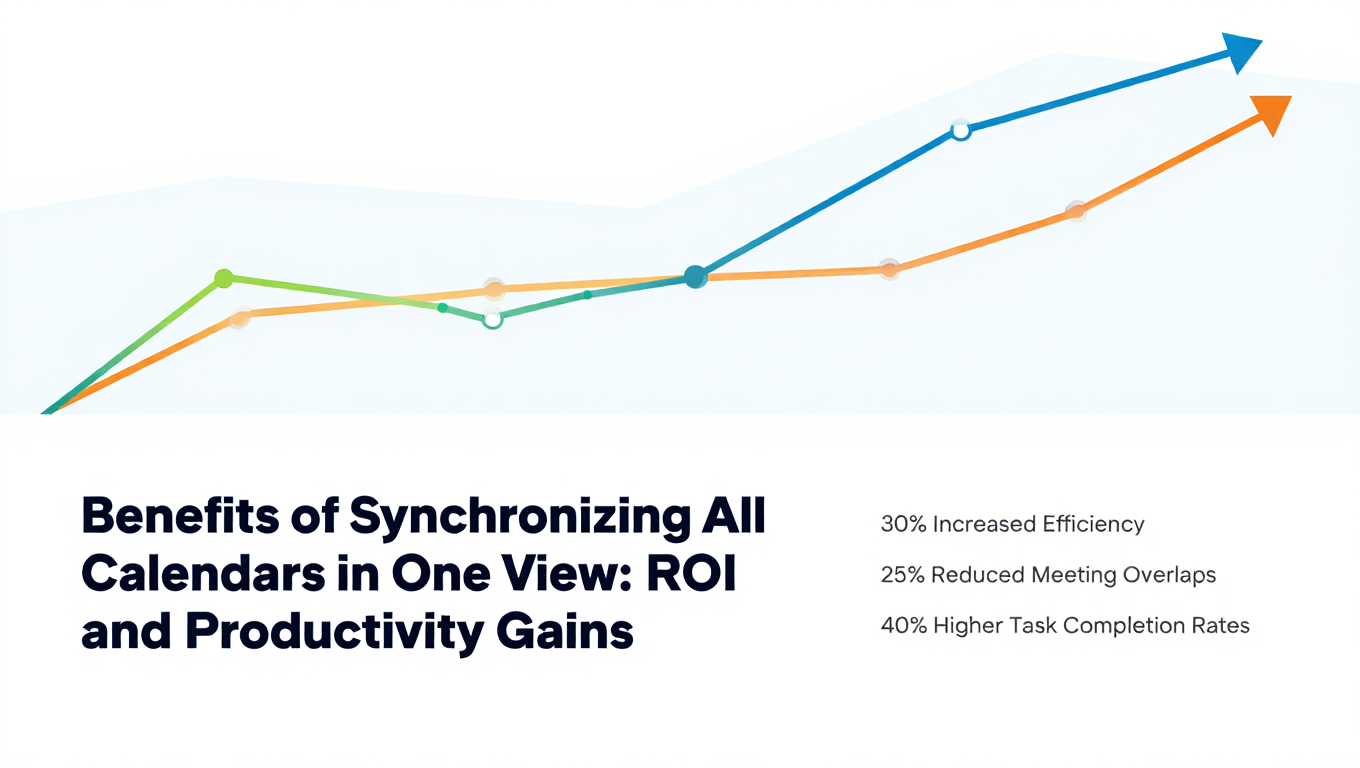
Benefits of Synchronizing All Calendars in One View: ROI and Productivity Gains
Discover the benefits of synchronizing all calendars in one view. See ROI data, productivity gains, reduced double bookings, and real-world business impact in 2025.
Best Bidirectional Calendar Sync Tools: 2025 Comparison Guide
Compare the best bidirectional calendar sync tools in 2025. Discover which platforms offer true two-way synchronization and which only provide one-way sync.
Best Two Way Calendar Sync Software: 2025 Expert Rankings & Comparison
Compare the top two-way calendar sync software tools. We tested 12 platforms for bidirectional sync speed, reliability, and field coverage to find which actually work.