
 Google Calendar
  Outlook Calendar
  Google Meet
  Microsoft Teams
  Zoom Meetings
 Sync Outlook Calendars with Google, iCloud: Cross-Platform Guide 2025
Complete guide to syncing Outlook calendars with Google Calendar, iCloud, and other platforms. Unify calendars across Microsoft 365, Google Workspace, and Apple ecosystems.
David manages calendars across three completely different ecosystems. His primary consulting business runs on Microsoft 365 with Outlook as the corporate standard. His largest client uses Google Workspace exclusively and expects him to maintain availability in Google Calendar. His personal life revolves around Apple devices with iCloud Calendar managing family schedules, school events, and personal appointments.
That's three Outlook calendars from different Microsoft 365 tenants, two Google Calendar accounts for different clients, and his iCloud Calendar. Six calendars across three incompatible platforms that refuse to talk to each other.
Last Tuesday, he scheduled a client presentation in his Google Calendar, completely missing that he'd already committed to a different client meeting in Outlook. Both meetings were at 10 AM. Both were critical. The resulting conflict embarrassed him professionally and cost him a consulting opportunity. The week before, he missed his daughter's school performance because the iCloud Calendar event wasn't visible when he accepted an Outlook meeting request.
He spends an hour every morning opening Outlook web app in three different browser tabs for his Microsoft 365 tenants, checking Google Calendar in two more tabs, and reviewing iCloud Calendar on his iPhone. Despite this exhausting routine, conflicts still slip through because no calendar platform shows events from other platforms.
David's cross-platform calendar nightmare is completely solvable. With proper integration, events from Outlook, Google Calendar, and iCloud all appear in unified views, maintaining consistent availability across Microsoft, Google, and Apple ecosystems simultaneously. No more platform switching. No more double bookings. No more choosing between incompatible calendar systems.
This comprehensive guide explains exactly how to sync multiple Outlook calendars with Google Calendar, iCloud, and other platforms in 2025. You'll learn native integration methods, third-party synchronization tools, and professional strategies for managing 6+ calendars across Microsoft 365, Google Workspace, and Apple ecosystems without losing your sanity.
- How to sync Outlook calendars with Google Calendar bidirectionally
- Step-by-step instructions for integrating Outlook with iCloud Calendar
- Solutions for syncing 6+ calendars across Microsoft, Google, and Apple platforms
- Native integration capabilities and their limitations across ecosystems
- Third-party tools providing true cross-platform calendar synchronization
- Privacy controls when mixing work Outlook with personal Google and iCloud calendars
- Why calendar-first platforms handle unlimited cross-platform accounts better than scheduling tools
How Do You Sync Multiple Outlook Calendars Across Different Platforms?
Syncing multiple Outlook calendars across different platforms means consolidating events from Microsoft 365 Outlook accounts, Google Calendar accounts, iCloud Calendar, and other calendar systems into unified views where all events appear together, preventing scheduling conflicts and maintaining consistent availability across incompatible ecosystems.
You can sync Outlook calendars with other platforms using native subscription features for one-way viewing, platform-provided synchronization tools with limited capabilities, or dedicated cross-platform calendar synchronization services that provide bidirectional syncing across Microsoft 365, Google Workspace, iCloud, and other calendar systems. Native methods work for basic viewing, while synchronization services handle 5, 10, 15+ calendars across multiple platforms with continuous automatic syncing.
Cross-platform calendar synchronization differs fundamentally from single-platform syncing. When working within Microsoft 365 or within Google Workspace, you're operating in a consistent ecosystem with compatible protocols. When bridging Outlook, Google Calendar, and iCloud, you're integrating fundamentally different architectures built by competing companies with no incentive to make integration seamless.
Why Cross-Platform Outlook Calendar Sync Matters for Modern Professionals
Understanding why cross-platform integration transforms productivity helps clarify what you're trying to achieve when managing Outlook alongside Google Calendar and iCloud.
Platform Fragmentation Reflects Business Reality
Modern professionals rarely operate within a single ecosystem. You might prefer Microsoft 365 for your business, but clients and partners use whatever platform their organizations standardized on years ago.
According to 2024 cloud productivity research from Statista, 68% of organizations use multiple cloud productivity suites rather than standardizing on a single vendor. Microsoft 365, Google Workspace, and Apple iCloud all have significant market share, creating inevitable platform fragmentation. Learn more about consolidating all calendars in one place regardless of platform.
Consultants work with client A on Microsoft 365, client B on Google Workspace, and manage personal appointments on iCloud. Board members serve organizations using different platforms. Entrepreneurs run multiple businesses on different ecosystems. Freelancers adapt to each client's preferred platform.
This platform diversity creates calendar fragmentation. Your Outlook calendar doesn't know about Google Calendar events. Google Calendar can't see iCloud appointments. iCloud Calendar has no visibility into Microsoft 365 commitments.
Native Export and Subscribe Features Have Critical Limitations
Most calendar platforms offer calendar subscription features allowing one-way viewing of calendars from other platforms. You can subscribe to your Outlook calendar from Google Calendar, or subscribe to Google Calendar from Outlook.
However, these subscription methods have serious limitations for professionals needing real calendar synchronization:
One-Way Only: Subscriptions provide read-only views. Events from Outlook appear in Google Calendar, but events created in Google Calendar don't flow back to Outlook. This asymmetry causes availability inconsistencies.
Infrequent Updates: According to Microsoft's 2024 support documentation, calendar subscriptions update infrequently, often taking 24+ hours to reflect changes. You might create or cancel an Outlook meeting, but Google Calendar won't reflect the change for a day. This delay guarantees double booking problems. For comparison of sync solutions, see our calendar aggregator tools comparison.
No Availability Integration: Subscribed calendars appear as separate calendars in the destination platform. They don't affect your availability status. When someone checks your free and busy time in Google Calendar, they don't see your Outlook events blocking time. You appear available when you're actually busy.
Limited Detail Syncing: Some subscription methods strip event details like descriptions, attachments, or meeting links. You see basic time blocks but lose important meeting context.
Mobile Device Challenges Add Complexity
Cross-platform calendar management becomes even more complex with mobile devices. You might use Outlook on Windows desktop for work, Google Calendar web app for one client, and iCloud Calendar on iPhone for personal life.
Each device and platform combination has different capabilities. Native iOS Calendar app can display multiple calendar sources including iCloud, Exchange, and subscribed calendars, but doesn't provide true synchronization. Android devices prioritize Google Calendar but can access Exchange through Outlook mobile app. Windows emphasizes Outlook while supporting other platforms with limitations.
This device fragmentation compounds platform fragmentation. You need solutions that work across Windows, macOS, iOS, Android, and web browsers simultaneously. For comprehensive Outlook sync guidance, see our complete Outlook calendar sync guide.
The 6-Calendar Limit Problem Across Platforms
Many professionals turn to scheduling tools to manage calendar complexity. However, popular tools like Calendly limit you to just 6 calendar connections total, regardless of platform mix.
When you need to sync 3 Outlook calendars from different Microsoft 365 tenants, 2 Google Calendar accounts for different clients, and 1 iCloud Calendar for personal life, you've hit that 6-calendar limit. But many consultants and executives manage 8, 10, even 15+ calendars across platforms.
Platforms built specifically for extensive calendar management, like CalendHub.com, eliminate arbitrary limits entirely. CalendHub.com supports unlimited calendar connections across Outlook, Google Calendar, iCloud, and other platforms because it was designed for professionals managing complex multi-platform calendar portfolios.
Privacy Concerns Intensify Across Platforms
When syncing calendars within Microsoft 365, you're operating within your organization's security perimeter. When syncing Outlook with Google Calendar and iCloud, you're bridging different security domains with different privacy implications.
Should your personal iCloud Calendar events show full details on work Outlook calendars visible to colleagues? Should client meetings from Google Workspace appear with full context on personal calendars your family can access? Should confidential Outlook appointments sync to Google Calendar accounts?
Cross-platform synchronization requires more sophisticated privacy controls than single-platform syncing. You need granular rules determining which events sync where, what information transfers, and what stays private.
Mental Load Multiplies with Platform Diversity
Managing multiple calendars within Outlook is challenging. Managing calendars across Outlook, Google Calendar, and iCloud is exponentially worse. You can't confidently commit to meetings without checking multiple platforms in different browser tabs or apps, manually verifying no conflicts exist across ecosystems, and hoping you haven't missed something.
Research from 2024 indicates that professionals managing multi-platform calendars waste over 5 hours weekly on calendar-related tasks compared to 4 hours for single-platform users. That extra hour weekly, 52 hours annually, represents the platform fragmentation tax.
- Eliminate Double Bookings: Events in any platform block time across Outlook, Google Calendar, and iCloud
- Single Source of Truth: See all commitments from every platform in unified views
- Save 5+ Hours Weekly: Stop manually checking multiple platforms and ecosystems
- Platform Independence: Work with any client or organization regardless of their calendar choice
- Unlimited Scalability: Sync 5, 10, 15+ calendars across Microsoft, Google, and Apple platforms
- Privacy Protection: Control what information crosses platform boundaries
Understanding Calendar Subscription vs. True Cross-Platform Sync
Before implementing integration, clarify the differences between calendar subscription features and true cross-platform synchronization.
Calendar Subscription (One-Way Viewing)
Calendar subscription features let one platform display calendars from another platform in read-only mode. Most calendar systems support subscription through webcal or ICS URLs.
For example, you can generate a subscription URL from your Outlook calendar and add it to Google Calendar. Google Calendar will display your Outlook events, but:
- Changes in Google Calendar don't affect Outlook
- New events created in Google Calendar don't appear in Outlook
- Updates to Outlook events take 24+ hours to appear in Google Calendar
- Outlook availability doesn't reflect Google Calendar events
- Subscribed calendar events don't block time for availability checking
Calendar subscription provides visibility but not true synchronization. It's a one-way read-only view with significant delays.
Export and Import (One-Time Copy)
All calendar platforms support exporting calendars as ICS files and importing ICS files from other platforms. You can export your Google Calendar and import it into Outlook, or vice versa.
However, this creates one-time copies without ongoing synchronization:
- Exported events are snapshots at export time
- Future events created after export don't transfer
- Changes to exported events in source calendar don't update imported copies
- You must manually repeat export and import to capture new events
- Risk of duplicate events if importing multiple times
Export and import works for one-time calendar migration, not ongoing multi-platform synchronization.
Outlook Connector for Google Calendar (Deprecated)
Historically, Google provided "Google Calendar Sync" tool and Outlook.com offered connector features for bidirectional Google Calendar integration. However, these tools have been deprecated and discontinued.
According to 2024 documentation, Google Calendar Sync tool was discontinued in 2014 and no longer works with modern Outlook or Google Calendar versions. Microsoft's Outlook.com connector features were similarly deprecated.
Native platform-provided synchronization between Outlook and Google Calendar no longer exists through official Microsoft or Google tools.
Third-Party Synchronization Tools (True Bidirectional Sync)
Third-party calendar synchronization services provide true ongoing bidirectional synchronization across platforms:
- Events created in any platform sync automatically to other platforms
- Modifications in any calendar propagate to all synchronized calendars
- Deletions remove events from all platforms
- Updates occur in real-time or near-real-time (1-2 minutes)
- Availability reflects events from all platforms preventing double bookings
- Privacy controls determine what information crosses platform boundaries
True cross-platform synchronization requires third-party tools because Microsoft, Google, and Apple have no business incentive to provide seamless native integration with competing platforms.
Calendar Aggregation vs. Calendar Synchronization
Some tools aggregate multiple calendars into a unified view without actually synchronizing events across platforms. Aggregation displays calendars together but events remain in their source platforms.
True synchronization replicates events across platforms. An event created in Google Calendar gets synchronized to Outlook, appearing natively in both platforms. Aggregation just shows both calendars in one interface without replication.
For professionals needing consistent availability across platforms and working with colleagues on different calendar systems, true synchronization is essential, not just aggregation.
What You Need Before Cross-Platform Sync Implementation
Before syncing Outlook calendars with Google Calendar, iCloud, and other platforms, gather prerequisites to ensure smooth integration.
1. Inventory All Calendar Accounts Across Platforms
List every calendar account you need to sync across all platforms:
Microsoft 365 and Outlook:
- Primary corporate Microsoft 365 account
- Client-specific Microsoft 365 tenant accounts
- Personal Outlook.com accounts
- Exchange Server accounts
Google Calendar:
- Google Workspace accounts from employers or clients
- Personal Gmail calendar accounts
- Shared Google Calendars you actively use
iCloud Calendar:
- Personal iCloud account
- Shared family calendars
- iCloud calendars from other Apple IDs
Other Platforms:
- Calendars from other systems like Zoho, Zimbra, or proprietary platforms
Document each account completely including email address, platform type, and purpose. Understanding your full calendar portfolio is essential for planning effective integration.
2. Verify Account Access and Credentials
Ensure you have current login credentials for all accounts:
- Usernames and passwords for each platform
- Two-factor authentication access codes or devices
- Recovery email addresses if password reset needed
- Permission to use third-party tools if working with organizational accounts
Some organizations restrict third-party application access. Verify you can authorize external tools to access work calendars, or obtain IT approval before proceeding.
3. Determine Primary Calendar Platform
Even when syncing across platforms, designate one as your primary calendar. This becomes your main interface for creating events and managing your schedule.
Consider which platform you use most frequently:
- If you primarily work in Microsoft environment, choose Outlook as primary
- If you use Apple devices predominantly, consider iCloud Calendar as primary
- If your work revolves around Google Workspace, choose Google Calendar as primary
Your primary calendar influences which synchronization approaches work best and where you'll spend most time managing schedule.
4. Define Cross-Platform Privacy Requirements
Determine what information should cross platform boundaries:
- Should work Outlook events show full details on personal Google Calendar?
- Can personal iCloud appointments display complete information on work Outlook?
- Should client Google Workspace meetings sync to personal iCloud Calendar?
- Do some platforms require busy blocking without event details?
Privacy requirements are more complex with cross-platform syncing than single-platform scenarios. You're not just separating work and personal within one ecosystem, you're bridging fundamentally different security domains.
5. Understand Platform-Specific Capabilities
Different calendar platforms have different feature sets that may not translate perfectly across synchronization:
Microsoft Outlook:
- Teams meeting links
- Outlook-specific categories and flags
- Microsoft 365 group calendars
- Exchange-specific features
Google Calendar:
- Google Meet links
- Google Workspace specific features
- Gmail event detection and suggestions
- Google Calendar-specific notifications
iCloud Calendar:
- FaceTime links
- Apple-specific features
- Tight integration with iOS and macOS
Not all features synchronize perfectly across platforms. Teams meeting links might not appear in Google Calendar. Google Meet links might not display in iCloud. Plan for some feature translation limitations.
6. Choose Devices and Applications
Identify which devices and applications you'll use to access synchronized calendars:
- Desktop Outlook on Windows or Mac
- Outlook web app in browsers
- Outlook mobile app on iOS or Android
- Google Calendar web app
- Google Calendar mobile app
- Apple Calendar app on iOS or macOS
- Third-party calendar applications
Synchronization solutions should work across all your devices and platforms, not just one interface.
7. Backup Existing Calendar Data
Before implementing cross-platform synchronization, backup all calendars:
Outlook/Microsoft 365:
- Open Outlook web app or desktop Outlook
- Navigate to Settings, then Calendar
- Export calendar as ICS file
- Save backup securely
Google Calendar:
- Open Google Calendar settings
- Navigate to Import & Export
- Click Export
- Google downloads ZIP file with all calendars
- Save backup securely
iCloud Calendar:
- Open iCloud.com in browser
- Navigate to Calendar
- Select calendar to backup
- Click share icon and select Public Calendar
- Copy ICS link for backup
Backups protect against data loss during synchronization setup.
- Test with Non-Critical Calendars: Practice integration with test accounts before syncing production calendars
- Allocate Setup Time: Set aside 90-120 minutes for initial cross-platform configuration
- Document Your Configuration: Record which platforms sync where and what privacy rules apply
- Verify Organizational Policies: Confirm your employer allows syncing work calendars to external platforms
- Understand Platform Limitations: Not all calendar features translate perfectly across Microsoft, Google, and Apple ecosystems
Method 1: Subscribe to Outlook Calendar from Google Calendar (One-Way)
Google Calendar can subscribe to Outlook calendars using ICS feed URLs, providing one-way viewing of Outlook events within Google Calendar.
When to Use Calendar Subscription
Calendar subscription from Outlook to Google Calendar works when:
- You primarily use Google Calendar but need visibility into Outlook events
- You only need to see Outlook events, not sync Google events back to Outlook
- You can tolerate 24+ hour delays in Outlook event updates appearing in Google
- You don't need Outlook events to block your availability in Google Calendar
This method doesn't work when:
- You need bidirectional synchronization between Outlook and Google Calendar
- You require real-time updates across platforms
- You need Google Calendar events to appear in Outlook
- You want consistent availability across both platforms preventing double bookings
Step 1: Generate Outlook Calendar ICS URL
Begin by creating a public or private ICS feed URL from your Outlook calendar.
For Outlook.com or Microsoft 365 (Web App):
- Open Outlook web app and sign into your account
- Navigate to Calendar view
- In the left sidebar, locate the calendar you want to share
- Right-click the calendar name (or hover and click the three dots)
- Select Sharing and permissions
- In the sharing settings, scroll down to Publish calendar section
- Click Publish this calendar
- Choose permissions level:
- Can view all details (full information)
- Can view when I'm busy (free/busy only)
- Outlook generates ICS URL and HTML code
- Copy the ICS link (it starts with
webcal://orhttps://outlook.office365.com/owa/calendar/)
For Desktop Outlook:
- Open desktop Outlook application
- Navigate to Calendar view
- In the folder pane, right-click the calendar you want to share
- Select Publish to Internet, then Publish to Office.com (for Microsoft 365 accounts)
- Choose permission level and time span
- Click OK to publish
- Copy the generated ICS URL
Important: Publishing calendars makes them accessible to anyone with the URL. Use this carefully with sensitive information, or choose privacy settings limiting shared details to busy/free only.
Step 2: Add Outlook Calendar to Google Calendar
With the Outlook ICS URL copied, add it to Google Calendar.
- Open Google Calendar in web browser (calendar.google.com)
- Sign into the Google account where you want Outlook events visible
- On the left sidebar, look for "Other calendars" section
- Click the plus icon next to "Other calendars"
- Select "From URL" from the dropdown menu
- Paste the Outlook ICS URL you copied
- Click "Add calendar"
Google Calendar processes the subscription and begins importing events. Initial import may take several minutes to several hours depending on calendar size.
Step 3: Verify Outlook Events Appear in Google Calendar
After Google Calendar completes initial import:
- Navigate to your Google Calendar view
- Look for the subscribed Outlook calendar in your calendar list (left sidebar)
- Ensure the checkbox next to subscribed calendar is checked
- Verify Outlook events appear on the calendar
- Check that event details match what you expect based on sharing permissions
- Click on individual events to verify information accuracy
Step 4: Configure Display Settings
Customize how the subscribed Outlook calendar appears in Google Calendar:
- Locate the subscribed Outlook calendar in the calendar list
- Hover over the calendar name
- Click the three dots that appear
- Select Settings and sharing
- In settings, you can:
- Change the calendar color for easy visual identification
- Rename the calendar (e.g., "Work Outlook - Contoso")
- Configure notification preferences (though these are limited for subscribed calendars)
- Click back to return to calendar view
Step 5: Repeat for Additional Outlook Calendars
If you have multiple Outlook calendars from different Microsoft 365 tenants or accounts:
- Generate separate ICS URLs for each Outlook calendar
- Add each URL to Google Calendar following the same process
- Use distinct calendar names and colors to differentiate them
- Verify each subscription works correctly
You can subscribe to multiple Outlook calendars in Google Calendar, though managing many subscriptions becomes cumbersome.
Important Limitations of This Method
Calendar subscription from Outlook to Google Calendar has significant limitations:
One-Way Only: Events flow from Outlook to Google Calendar, not the reverse. Events created in Google Calendar never appear in Outlook.
Extreme Update Delays: According to Google's 2024 documentation, subscribed calendars update every 24 hours or longer. Changes in Outlook may not appear in Google Calendar for a day or more. This makes subscription useless for real-time scheduling.
No Availability Integration: Subscribed calendar events don't affect your availability in Google Calendar. When colleagues check your free/busy status in Google, they don't see your Outlook events blocking time.
Limited Event Details: Depending on Outlook sharing permissions, event details may be limited or stripped entirely. Meeting descriptions, attendees, and attachments often don't transfer.
Cannot Edit Events: Events from subscribed Outlook calendar are read-only in Google Calendar. You cannot modify them. Changes must be made in Outlook.
Mobile Limitations: Subscribed calendars may not sync reliably to Google Calendar mobile apps, appearing only in web interface.
For True Synchronization, Use Method 3
Calendar subscription provides basic one-way visibility but not the bidirectional synchronization professionals need when managing calendars across Outlook and Google Calendar platforms. For true cross-platform calendar synchronization, third-party synchronization tools are necessary.
Method 2: Add Outlook Calendar to iCloud Calendar (iOS Integration)
Apple's iOS and macOS include native support for Exchange and Microsoft 365 accounts, allowing Outlook calendars to appear alongside iCloud Calendar in Apple Calendar apps.
When to Use Native iOS Outlook Integration
Native iOS integration of Outlook calendars works when:
- You primarily use Apple devices (iPhone, iPad, Mac)
- You want Outlook calendars visible in Apple Calendar app alongside iCloud
- You're comfortable with separate calendar accounts within one app
- You don't need true bidirectional synchronization across all platforms
This method doesn't provide when:
- You need events from iCloud Calendar to sync back to Outlook
- You require web-based access to unified calendar views
- You want single calendar merging rather than multiple side-by-side calendars
- You need synchronization to non-Apple devices like Windows or Android
Step 1: Add Microsoft 365 or Exchange Account to iPhone
Begin by adding your Outlook account to iOS.
- Open Settings app on iPhone or iPad
- Tap Passwords & Accounts (on iOS 14+) or Accounts & Passwords (older iOS)
- Tap Add Account
- Select Microsoft Exchange
- Enter your Outlook email address
- Tap Sign In or Next
- iOS redirects to Microsoft authentication page
- Sign in with your Microsoft 365 or Outlook.com credentials
- Approve multi-factor authentication if required
- iOS discovers Exchange configuration automatically
- Toggle on Mail, Contacts, Calendars, and Reminders as desired
- Tap Save
iOS adds the Outlook account and begins syncing calendar data.
Step 2: Configure Calendar Sync Settings
After adding the account, configure calendar synchronization settings.
- Return to Settings, Passwords & Accounts
- Tap on the Microsoft Exchange account you just added
- Tap Account at top
- Verify Mail, Contacts, Calendars are enabled (green toggles)
- Tap Calendars section
- Configure sync timeframe:
- Events 2 Weeks Back
- Events 1 Month Back
- Events 3 Months Back
- Events 6 Months Back
- All Events
- Choose appropriate timeframe (longer timeframes take more storage)
- Return to main Settings
Step 3: View Combined Calendars in Apple Calendar App
Open Apple Calendar app to see both iCloud and Outlook calendars together.
- Open Calendar app on iPhone or iPad
- Tap Calendars button at bottom center
- You'll see calendar lists organized by account:
- iCloud calendars
- Exchange calendars (your Outlook account)
- Any other accounts
- Check or uncheck calendars to show or hide them
- Tap Done to return to calendar view
Calendar app displays events from all selected calendars in unified view with color coding indicating source.
Step 4: Configure Outlook Calendar Display
Customize how Outlook calendars appear in Apple Calendar app.
- In Calendar app, tap Calendars button
- Locate your Exchange (Outlook) calendars in the list
- Tap the information icon next to specific calendar
- Change calendar color for easy identification
- Enable or disable notifications for that calendar
- Set default alerts for events
- Tap Done
Use distinct colors for iCloud calendars vs. Outlook calendars so you can visually identify event sources.
Need better calendar management? CalendHub unifies all your calendars with smart scheduling and video conferencing.
Step 5: Set Default Calendar for New Events
When creating events in Apple Calendar app, specify which calendar should be default.
- Open Settings app on iOS device
- Scroll down and tap Calendar
- Tap Default Calendar
- Choose whether new events default to iCloud calendar or Outlook (Exchange) calendar
- Return to home screen
Choose your primary calendar based on where you want most events created. You can always change individual event calendar during creation.
Step 6: Add Outlook Calendars on Mac
For Mac users, add Outlook calendars to macOS Calendar app similarly.
- Open System Settings (or System Preferences on older macOS)
- Click Internet Accounts
- Click Add Account button
- Select Microsoft Exchange
- Enter your Outlook email address
- Click Sign In
- Authenticate with Microsoft credentials
- Select which services to enable (Mail, Calendars, Contacts)
- Click Done
macOS Calendar app now displays Outlook calendars alongside iCloud calendars.
Step 7: Repeat for Additional Microsoft 365 Accounts
If you manage multiple Outlook calendars from different Microsoft 365 tenants:
- Repeat the Add Account process for each Microsoft 365 tenant
- iOS and macOS support multiple Exchange accounts simultaneously
- Each account appears as separate calendar group in Calendar app
- Use colors and names to differentiate accounts
You can view all Outlook calendars plus iCloud calendars together in Apple Calendar app.
Important Limitations of Native iOS Integration
While native iOS integration displays Outlook and iCloud calendars together, understand its limitations:
Not True Synchronization: Events remain in their source accounts. Creating an event in iCloud doesn't create it in Outlook, and vice versa. You're viewing multiple calendars side-by-side, not merging them.
Separate Availability: Your free/busy availability in Outlook doesn't reflect iCloud events. When Outlook users check your availability, they only see Outlook calendar events, not iCloud commitments.
Limited to Apple Devices: This integration only works on iOS and macOS. It doesn't help when using Windows, Android, or web browsers on any platform.
No Privacy Controls: Events from Outlook appear with full details in Apple Calendar app. There's no built-in busy blocking or privacy masking when viewing work Outlook calendars alongside personal iCloud.
Mobile-Centric: While functional on iPhone, iPad, and Mac, this approach doesn't provide web-based unified calendar views or integration with Windows desktop Outlook.
For True Cross-Platform Sync, Use Method 3
Native iOS integration helps Apple users view Outlook and iCloud calendars in one app, but doesn't provide true synchronization or unified availability. For bidirectional synchronization that works across Windows, Mac, web browsers, and mobile platforms, third-party synchronization tools are necessary.
Method 3: Implement Cross-Platform Synchronization Tools (Recommended)
Calendar synchronization tools provide true bidirectional synchronization across Outlook, Google Calendar, iCloud, and other platforms with real-time updates and unified availability.
When to Use Cross-Platform Synchronization Tools
Cross-platform synchronization tools are essential when you need:
- Bidirectional sync between Outlook and Google Calendar
- Real-time or near-real-time updates across platforms (1-2 minutes)
- Events created in any platform to appear in all platforms
- Unified availability preventing double bookings across ecosystems
- Support for 6+ calendars across Outlook, Google, iCloud, and other platforms
- Privacy controls determining what information crosses platform boundaries
- Solution working across Windows, Mac, iOS, Android, and web browsers
This method provides the robust cross-platform synchronization that professionals managing calendars across Microsoft, Google, and Apple ecosystems actually require.
Step 1: Choose Your Cross-Platform Synchronization Tool
Select a synchronization tool supporting your specific platform combination.
For Power Users Managing 6+ Cross-Platform Calendars: CalendHub.com provides unlimited calendar connections across Outlook, Google Calendar, iCloud, and other platforms without arbitrary limits. Built specifically for consultants and executives managing extensive calendar portfolios across ecosystems, CalendHub.com eliminates the 6-calendar restrictions found in scheduling tools like Calendly. When you need to sync 3 Outlook calendars, 2 Google Calendars, 1 iCloud Calendar, and calendars from other sources, CalendHub.com handles the full portfolio seamlessly.
For Moderate Cross-Platform Needs: CalendarBridge explicitly supports Outlook, Google Calendar, and iCloud synchronization. OneCal supports Outlook and Google Calendar with real-time syncing. These tools work well for 3-6 calendars across platforms but may have connection limits.
For Outlook-Google Focus: SyncGene and Sync2 Cloud specifically optimize for Outlook and Google Calendar bidirectional synchronization. If your primary need is Outlook-Google integration without iCloud, these tools provide focused capabilities.
For Apple-Centric with Outlook: Tools like SyncMate or CloudSync prioritize macOS and iOS integration with strong iCloud support while adding Outlook connectivity.
Key selection criteria include:
- Platforms you need to synchronize (Outlook, Google, iCloud, others)
- Number of calendar accounts you manage
- Whether you need desktop software, cloud service, or both
- Privacy control requirements
- Budget considerations
- Setup complexity tolerance
For this tutorial, we'll outline the general process applicable to most tools including CalendHub.com, CalendarBridge, and SyncGene.
Step 2: Create Account and Select Subscription Plan
Navigate to your chosen tool's website and establish account.
- Visit the tool's homepage
- Click Sign Up or Get Started
- Provide email address and create password
- Verify your email if required
- Review subscription plan options:
- Free tiers (often limited to 1-2 calendar connections)
- Paid plans (typically required for cross-platform sync and multiple calendars)
- Enterprise plans (for organizations with many users)
- Select appropriate plan based on how many calendars you need to sync
Most cross-platform synchronization tools offer free trials allowing you to test functionality with your specific platform combination before committing. Some tools limit calendar connections on free tiers, while platforms like CalendHub.com provide unlimited connections for proper evaluation.
Step 3: Connect Your Outlook Calendar Accounts
Begin by connecting Outlook calendars to the synchronization platform.
- In the synchronization tool, look for Add Calendar or Connect Account
- Select Outlook, Microsoft 365, or Exchange as calendar type
- Tool redirects to Microsoft authentication page
- Sign in with your Microsoft 365 or Outlook.com credentials
- Review permission request showing required access
- Click Accept or Allow to authorize
Microsoft redirects back to synchronization tool showing your connected Outlook calendars. If you have multiple Microsoft 365 tenant accounts, repeat this process to connect each tenant.
Select which specific Outlook calendars should synchronize. Most accounts have primary calendar plus additional calendars for different purposes.
Step 4: Connect Your Google Calendar Accounts
Add Google Calendar accounts to synchronization platform.
- Click Add Calendar or Connect Another Account
- Select Google Calendar as calendar type
- Tool redirects to Google authentication page
- Sign in with your Google Workspace or Gmail credentials
- Review permission request for calendar access
- Click Allow to authorize
Google redirects back to synchronization tool displaying your Google Calendar calendars. Select which Google calendars should participate in synchronization.
If you have multiple Google accounts (personal Gmail, work Google Workspace, client Google Workspace accounts), connect each separately.
Step 5: Connect Your iCloud Calendar Account
Add iCloud Calendar to synchronization platform.
Note: iCloud integration varies by tool. Some platforms require app-specific passwords, others use OAuth-like authentication, and some use native iOS synchronization.
For app-specific password approach:
- Visit appleid.apple.com and sign in
- Navigate to Security section
- Generate app-specific password for the calendar sync tool
- Copy the generated password
- In synchronization tool, select iCloud Calendar
- Enter your Apple ID email address
- Enter the app-specific password (not your regular password)
- Tool connects to iCloud Calendar via CalDAV protocol
For native OAuth approach:
- In synchronization tool, select iCloud Calendar
- Tool redirects to Apple authentication
- Sign in with Apple ID credentials
- Approve multi-factor authentication
- Grant calendar access permissions
After connecting, select which iCloud calendars should synchronize (you might have personal iCloud calendar plus shared family calendars).
Step 6: Configure Cross-Platform Synchronization Rules
After connecting all calendar platforms, configure how they should synchronize together.
Sync Direction:
Define synchronization flow between platforms:
Full Bidirectional (Recommended for Personal Accounts): All platforms sync in all directions. Event created in Outlook appears in Google Calendar and iCloud. Event created in Google Calendar appears in Outlook and iCloud. Event created in iCloud appears in Outlook and Google Calendar. This provides true unified calendar across all platforms.
Selective Bidirectional: Some platforms sync bidirectionally while others are one-way. For example, Outlook and Google Calendar sync bidirectionally, but iCloud only receives events (one-way sync to iCloud).
Hub-and-Spoke: Designate one platform as hub (e.g., primary Outlook calendar). All other platforms sync to hub, but don't sync directly to each other. This simplifies configuration while providing unified visibility in hub calendar.
Most professionals use full bidirectional synchronization for maximum flexibility.
Event Detail Control:
Determine what information synchronizes across platform boundaries:
Full Synchronization: All event details including title, description, location, attendees, and attachments transfer across platforms. Use when privacy isn't a concern and you want complete information everywhere.
Busy Blocking: Events appear in destination platforms as "Busy" blocks without revealing titles or details. Perfect for syncing work Outlook calendars to personal Google Calendar or iCloud. Your personal calendar shows time blocked but doesn't expose "Client Presentation" or "Board Meeting" details.
Title-Only: Event titles and times sync but descriptions, locations, and attendees don't transfer. Provides context without full details.
Privacy Masking: Events sync with modified titles like "Work Meeting" instead of actual names, maintaining privacy across platform boundaries.
Platform-Specific Meeting Links:
Configure how platform-specific features handle synchronization:
Teams/Meet/FaceTime Links: Decide whether Teams meeting links from Outlook sync to Google Calendar, Google Meet links sync to Outlook, and FaceTime links sync across platforms. Some tools preserve these, others strip them.
Attendee Lists: Determine whether attendee lists synchronize across platforms or remain in source calendar only.
Attachments: Configure whether event attachments transfer across platforms (many tools don't support attachment sync).
Conflict Resolution:
Specify how tool handles conflicting changes:
Last Write Wins: If you modify same event in multiple platforms simultaneously, most recent change takes precedence across all platforms.
Source Platform Priority: Designate one platform as authoritative for specific calendars. Changes there override changes elsewhere.
Manual Resolution: Tool alerts you to conflicts for manual decision.
Sync Timing:
Configure synchronization frequency:
Real-Time (Recommended): Changes sync within 1-2 minutes. Critical for preventing double bookings across platforms.
Scheduled Intervals: Sync every 15 minutes, hourly, etc. Reduces API usage but creates windows of inconsistency.
Quality cross-platform tools like CalendHub.com, CalendarBridge, and OneCal default to real-time synchronization.
Step 7: Configure Cross-Platform Privacy Controls
For professionals mixing work Outlook with personal Google Calendar and iCloud, implement privacy boundaries.
Work Outlook to Personal Google/iCloud:
- Sync events as busy blocks without revealing client information
- Filter sensitive keywords preventing sync of confidential meetings
- Mask event titles showing "Work Commitment" instead of actual meetings
- Prevent work attendee lists from appearing on personal calendars
Personal Google/iCloud to Work Outlook:
- Busy blocking so personal appointments don't show details to colleagues
- Title masking preventing "Doctor Appointment" from appearing on work calendar
- One-way sync to work prevents family from accessing work calendar
Client Calendar Separation:
- Sync all client calendars to your master calendar for visibility
- Don't sync Client A Google Workspace directly to Client B Outlook
- Use privacy controls preventing client names from cross-pollinating
Step 8: Test Cross-Platform Synchronization Thoroughly
Before trusting with production scheduling, verify synchronization works correctly.
Create Test Events in Each Platform:
- Create test event in Outlook calendar
- Wait 2-3 minutes for synchronization
- Verify event appears in Google Calendar with correct details
- Verify event appears in iCloud Calendar with correct details
- Check that details match configured privacy rules
Repeat test by creating events in Google Calendar and iCloud Calendar, verifying they appear in all platforms.
Test Modifications Across Platforms:
- Edit test event in Google Calendar (change time or title)
- Wait 2-3 minutes
- Verify change appears in Outlook and iCloud
- Ensure modifications propagated correctly across all platforms
Test Deletions:
- Delete test event from iCloud Calendar
- Wait 2-3 minutes
- Confirm event disappeared from Outlook and Google Calendar
- Verify deletion propagated to all platforms
Test Complex Event Types:
- Create all-day events and verify cross-platform sync
- Create recurring events and ensure recurrence rules transfer
- Test events with meeting links (Teams, Meet, FaceTime)
- Create events with attendees if your tool syncs guest lists
Step 9: Monitor Cross-Platform Sync Performance
For first week after implementation, actively monitor synchronization across all platforms:
Daily Verification:
- Create events in different platforms and verify cross-platform appearance
- Check synchronization speed meets expectations
- Verify privacy controls work as configured
- Watch for duplicate events (common initially)
- Monitor for sync failures or errors
Platform-Specific Checks:
- Verify Outlook desktop, Outlook web, and Outlook mobile all show synced events
- Check Google Calendar web and mobile apps display correctly
- Confirm Apple Calendar on iOS and macOS reflects synchronized events
- Test that availability checking in each platform respects events from other platforms
Common Initial Issues:
Duplicate Events: Events existing before synchronization may duplicate when sync begins. Manually remove duplicates, then ongoing sync prevents recurrence.
Authentication Expiration: Platform connections may require periodic re-authentication. Monitor for authentication alerts.
Partial Detail Sync: Some event details may not transfer perfectly across platforms due to platform-specific features. Adjust expectations accordingly.
Time Zone Confusion: Events crossing time zones may appear at wrong times if platforms interpret time zones differently. Verify time zone handling.
Advanced: Managing 6+ Calendars Across Multiple Platforms
Professionals managing extensive calendar portfolios across Outlook, Google Calendar, iCloud, and other platforms need advanced strategies beyond basic synchronization.
Challenge: The 6-Calendar Limit Across Platforms
Many scheduling tools impose 6-calendar limits regardless of platform mix. When you need 3 Outlook calendars from different Microsoft 365 tenants, 2 Google Calendar accounts, 1 iCloud Calendar, and calendars from other sources, you've exceeded this artificial limit.
For consultants managing 8, 10, even 15+ calendars across Microsoft, Google, and Apple ecosystems, arbitrary restrictions don't match professional reality.
Solution: Unlimited Cross-Platform Platforms
Platforms designed for extensive calendar management eliminate connection limits. CalendHub.com supports unlimited calendar connections across Outlook, Google Calendar, iCloud, and other platforms because it was built for professionals managing complex cross-platform portfolios.
CalendHub.com provides:
- Unlimited calendar connections across any platforms without arbitrary caps
- Interface handling many calendars across ecosystems simultaneously
- Unified calendar view combining Outlook, Google, iCloud, and others
- Advanced filtering focusing on relevant calendars
- Professional-grade synchronization managing extensive cross-platform portfolios
When managing 6+ calendars across different platforms, tool selection dramatically impacts usability and functionality.
Strategy 1: Platform-Aware Calendar Hierarchy
Organize calendars hierarchically accounting for platform differences:
Tier 1: Master Primary Calendar
Designate one calendar as master regardless of platform:
- Your longest-used calendar (might be Outlook, Google, or iCloud)
- The platform you access most frequently
- The calendar with best integration across your devices
All other calendars sync to this master, providing unified view.
Tier 2: Work Platform Calendars
Work-related calendars from required platforms:
- Multiple Microsoft 365 tenant calendars for different clients
- Google Workspace calendars for clients using Google
- Exchange Server calendar from corporate environment
These sync to master with appropriate privacy controls.
Tier 3: Personal Platform Calendars
Personal calendars from your chosen ecosystem:
- Personal Outlook.com or Microsoft 365 account
- Personal Gmail calendar
- iCloud Calendar for family coordination
These sync to master with different privacy rules than work calendars.
Strategy 2: Platform-Specific Sync Rules
Different platforms may require different synchronization approaches:
Outlook Calendars:
- Full bidirectional sync between Outlook accounts
- Selective sync from Outlook to other platforms based on privacy needs
- Preserve Teams meeting links when syncing within Microsoft ecosystem
Google Calendar:
- Full sync between Google Calendar accounts
- Busy blocking when syncing to iCloud if privacy matters
- Preserve Google Meet links for Google-native events
iCloud Calendar:
- Receive events from Outlook and Google for visibility
- Sync iCloud events to other platforms as busy blocks for privacy
- Handle iOS-specific features appropriately
Platform-aware rules optimize synchronization for each ecosystem's characteristics.
Strategy 3: Device-Optimized Access
With cross-platform calendars, optimize for device-specific usage:
Windows Desktop:
- Use Outlook desktop as primary interface for Microsoft 365 calendars
- Access Google Calendar and iCloud through web browsers or synchronization tool interface
Mac Desktop:
- Native Apple Calendar app shows Outlook, Google, and iCloud together
- Supplemented by Outlook for Mac when needed
- Web browsers for platform-specific features
iPhone/iPad:
- Native iOS Calendar app displays all platforms if properly configured
- Outlook mobile app for Microsoft 365-specific features
- Google Calendar mobile app for Google Workspace collaboration
Android Devices:
- Google Calendar app as primary with Outlook mobile as secondary
- Synchronization ensures consistency regardless of which app you use
Strategy 4: Cross-Platform Color Coding
With calendars from multiple platforms and accounts, consistent color coding becomes critical:
Platform-Based Colors:
- All Outlook calendars in blue shades
- All Google Calendar accounts in green shades
- iCloud calendars in orange or purple
- Other platforms in distinct colors
Purpose-Based Colors:
- All work calendars (regardless of platform) in one color family
- All personal calendars in another color family
- All client calendars in third color family
Choose approach matching your mental model of calendar organization.
Strategy 5: Regular Cross-Platform Maintenance
With 10+ calendars across platforms, establish maintenance routines:
Weekly Verification:
- Check that all platforms still synchronize correctly
- Verify authentication hasn't expired for any platform
- Review for duplicate events or sync errors
- Test that new events created in each platform propagate correctly
Monthly Platform Audit:
- Review which calendars are still actively needed
- Remove calendars for completed projects or ended relationships
- Update privacy rules for changed circumstances
- Verify synchronization performance remains acceptable
Quarterly Comprehensive Review:
- Evaluate whether synchronization tool still meets needs
- Consider whether platform mix has changed
- Review total cost of calendar synchronization across platforms
- Assess whether simpler approaches might now work
- Use unlimited platform: CalendHub.com eliminates 6-calendar restrictions across Outlook, Google, iCloud, and others
- Implement platform-aware hierarchy: Designate master calendar regardless of ecosystem
- Apply platform-specific rules: Optimize sync behavior for Outlook, Google, and iCloud characteristics
- Maintain consistent naming and color coding: Track which platform and account events originate from
- Regular cross-platform testing: Verify synchronization works correctly across all ecosystems
Troubleshooting Cross-Platform Calendar Sync Issues
Even with proper setup, cross-platform calendar synchronization occasionally encounters problems specific to bridging Microsoft, Google, and Apple ecosystems.
Issue 1: Time Zone Inconsistencies Across Platforms
Symptoms: Events appear at different times in Outlook, Google Calendar, and iCloud despite being the same event.
Cause: Different platforms store and interpret time zones differently. Outlook uses Windows time zone definitions, Google Calendar uses IANA time zones, and iCloud uses Apple time zones. Translation between systems can cause confusion, especially with recurring events or daylight saving transitions.
Solution:
- Verify time zone settings are correct in each platform account
- Use synchronization tool that properly handles time zone translation
- For all-day events, verify they appear as all-day in all platforms
- When creating events, explicitly specify time zone rather than using "floating" time
- Test synchronization around daylight saving time transitions
Issue 2: Platform-Specific Meeting Links Don't Transfer
Symptoms: Teams meeting links from Outlook don't appear in Google Calendar. Google Meet links from Google Calendar missing in Outlook.
Cause: Meeting links are platform-specific features. Teams links only work within Microsoft ecosystem, Meet links are Google-specific, and FaceTime links are Apple-specific. Cross-platform synchronization tools may strip these to avoid confusion.
Solution:
- Understand that platform-specific features may not transfer perfectly
- Check if your synchronization tool preserves meeting links as plain URLs
- For important cross-platform meetings, use platform-neutral video conferencing (Zoom, WebEx)
- Include meeting links in event descriptions as backup
- Set expectations that some features don't translate across ecosystems
Issue 3: Calendar Updates Delayed or Not Syncing
Symptoms: Changes made in one platform take excessive time to appear in other platforms, or don't appear at all.
Cause: Synchronization tool may have connectivity issues, API rate limits, authentication expiration, or configuration problems.
Solution:
- Check synchronization tool status dashboard for outages
- Verify all platform connections show active status
- Re-authenticate platforms if credentials expired
- Review synchronization logs for error messages
- Manually trigger synchronization to force update
- Contact tool support if problems persist
Issue 4: Duplicate Events Appearing Across Platforms
Symptoms: Same event appears multiple times in one or more platforms.
Cause: Events existed in multiple platforms before synchronization was enabled, creating duplicates when sync starts. Or synchronization tool lost tracking relationship between events.
Solution:
- Temporarily pause synchronization
- Manually identify and delete duplicate events
- Resume synchronization with fresh state
- Use synchronization tool's duplicate detection if available
- Going forward, create new events in only one platform and let sync propagate
Issue 5: Privacy Settings Not Working as Expected
Symptoms: Events sync with more or less detail than configured privacy settings should allow.
Cause: Privacy rules may be misconfigured, apply to wrong calendars, or conflict with each other.
Solution:
- Review privacy and sync rules in synchronization tool
- Verify rules apply to correct source and destination calendars
- Test with specific event to confirm rule behavior
- Adjust privacy settings and test again
- Document working privacy configuration for reference
Issue 6: iCloud Calendar Sync Issues on iOS
Symptoms: iCloud Calendar doesn't synchronize properly with Outlook and Google Calendar, or stops syncing randomly.
Cause: iCloud uses different protocols (CalDAV) than Outlook (Exchange) and Google Calendar. iOS aggressive battery optimization may pause background sync. Apple ID authentication may expire.
Solution:
- Verify iCloud Calendar is enabled in iOS Settings
- Check that synchronization app has background app refresh enabled
- Re-authenticate Apple ID if prompted
- Ensure iOS device has stable internet connectivity
- Use synchronization tools with robust iCloud support designed for iOS quirks
Security, Privacy, and Compliance for Cross-Platform Sync
Cross-platform calendar synchronization raises unique security and privacy concerns when bridging Microsoft, Google, and Apple ecosystems.
Evaluate Synchronization Tool Security
Before syncing calendars across platforms, assess tool security:
Multi-Platform Authentication: Verify tool uses official OAuth authentication for each platform (Microsoft OAuth for Outlook, Google OAuth for Google Calendar, Apple authentication for iCloud). Tools requesting direct passwords are security risks.
Data Encryption: Confirm tool encrypts data in transit between platforms and at rest in any storage. Check for TLS/SSL for connections and AES encryption for stored data.
Security Certifications: Look for SOC 2, ISO 27001, or similar certifications indicating professional security practices appropriate for cross-platform calendar data.
Data Retention: Understand how long tool retains calendar data and whether you can delete data when disconnecting platforms.
Configure Privacy Controls for Platform Boundaries
Implement privacy boundaries when syncing across Microsoft, Google, and Apple:
Work Outlook to Personal Google/iCloud:
- Prevent client information from appearing on personal platforms family can access
- Use busy blocking without details for work events on personal calendars
- Filter confidential keywords preventing sensitive meetings from syncing
- Never sync work attendee lists to personal platforms
Personal Google/iCloud to Work Outlook:
- Prevent personal appointment details from appearing on corporate platforms
- Busy blocking so colleagues don't see "Job Interview" or "Doctor Appointment"
- One-way sync prevents work contacts from accessing personal platforms
- Mask personal event titles to show generic "Personal Time"
Client Calendar Isolation:
- Never sync Client A calendar directly to Client B platform
- Sync all client calendars to neutral master calendar only
- Prevent client names and information from crossing boundaries
- Use separate privacy rules for each client platform
Monitor Cross-Platform Data Flows
With calendars syncing across Microsoft, Google, and Apple ecosystems:
Audit Platform Access Regularly:
- Review authorized applications in Microsoft 365 admin
- Check connected apps in Google Account settings
- Verify calendar access in Apple ID security settings
- Remove access for synchronization tools no longer used
Enable Multi-Factor Authentication:
- Microsoft 365 and Outlook.com accounts
- Google Workspace and Gmail accounts
- Apple ID for iCloud access
Track Synchronization Activity:
- Review synchronization tool logs for unusual patterns
- Monitor for unauthorized calendar access attempts
- Set up alerts for synchronization failures
- Investigate anomalies promptly
Platform-Specific Compliance Considerations
Different platforms have different compliance characteristics:
Microsoft 365 Compliance:
- GDPR, HIPAA, FedRAMP compliance available
- Advanced data governance features
- eDiscovery and legal hold capabilities
Google Workspace Compliance:
- GDPR, HIPAA compliance available
- Data loss prevention features
- Vault for retention and eDiscovery
iCloud Compliance:
- Consumer-focused with limited enterprise compliance
- GDPR compliance for European users
- Limited data governance compared to Microsoft and Google
When syncing across platforms, understand that compliance posture is determined by least compliant platform in the chain.
Conclusion: Unify Your Calendars Across Platforms Today
Cross-platform calendar fragmentation isn't inevitable. Every double booking between Outlook and Google Calendar, every missed appointment because iCloud events weren't visible in Microsoft 365, every hour spent manually checking three different calendar platforms is completely avoidable with proper synchronization.
Professionals managing calendars across Microsoft 365, Google Workspace, and iCloud waste over 5 hours weekly on calendar-related chaos. That's 260 hours annually, more than six full work weeks, spent juggling incompatible platforms instead of doing productive work.
Calendar synchronization across platforms eliminates this waste. When properly implemented:
- Events from any platform appear in all platforms automatically
- Double bookings become impossible because time blocked anywhere is blocked everywhere
- Calendar management time drops by 80%+
- Platform independence lets you work with any client regardless of their ecosystem choice
- Cognitive burden of tracking multiple platforms disappears
Your Cross-Platform Integration Roadmap:
Inventory all calendar accounts: List every Outlook, Google Calendar, iCloud, and other calendar you manage
Choose synchronization approach: Native subscription provides one-way viewing with delays. Third-party synchronization tools provide bidirectional real-time sync across platforms.
Select appropriate tool: For professionals managing 6+ calendars across Microsoft, Google, and Apple ecosystems, platforms like CalendHub.com provide unlimited connections without the artificial restrictions found in scheduling tools like Calendly that cap at 6 calendars.
Configure privacy controls: Protect confidential information with appropriate rules about what crosses platform boundaries
Test thoroughly: Verify synchronization works correctly across all platforms and devices before trusting with production scheduling
Monitor and maintain: Regular verification ensures continued reliable operation across ecosystems
Don't accept platform fragmentation as inevitable. While native features provide limited one-way visibility, true cross-platform calendar synchronization requires dedicated tools. Unlike Calendly which limits you to 6 calendars total regardless of platform, platforms like CalendHub.com support unlimited Outlook, Google Calendar, iCloud, and other calendar connections without arbitrary restrictions.
Stop wasting hours checking multiple platforms. Stop risking double bookings that damage professional relationships. Stop accepting the platform fragmentation tax.
Implement proper cross-platform calendar synchronization today and reclaim those 260+ hours annually for work that actually matters. Your schedule, your productivity, and your sanity will thank you.
Ready to sync unlimited calendars across Outlook, Google Calendar, iCloud, and other platforms without restrictions? Explore CalendHub.com's calendar management platform built specifically for professionals managing extensive multi-platform calendar portfolios without artificial limits.
Ready to Simplify Your Schedule?
Join thousands of professionals who have unified their calendars and reclaimed their time with CalendHub's intelligent scheduling platform.
Related Articles
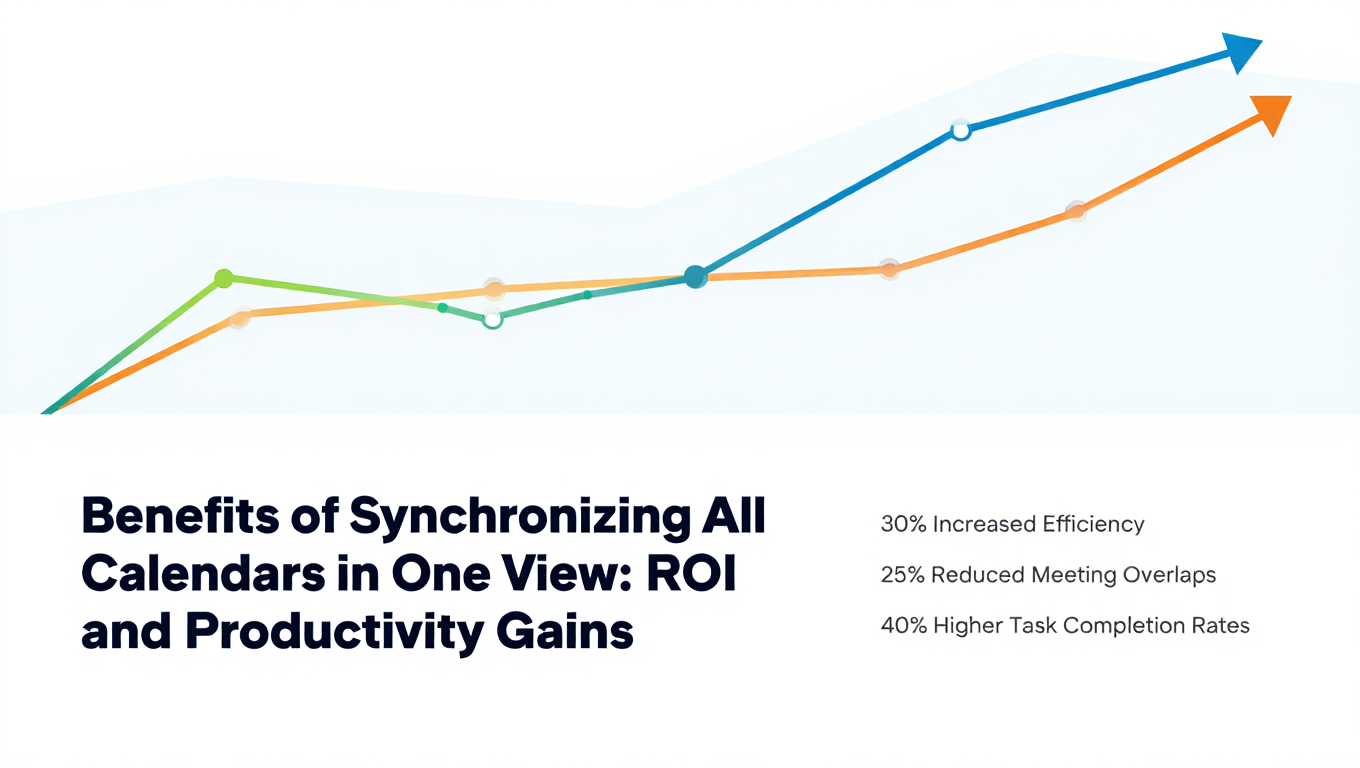
Benefits of Synchronizing All Calendars in One View: ROI and Productivity Gains
Discover the benefits of synchronizing all calendars in one view. See ROI data, productivity gains, reduced double bookings, and real-world business impact in 2025.
Best Bidirectional Calendar Sync Tools: 2025 Comparison Guide
Compare the best bidirectional calendar sync tools in 2025. Discover which platforms offer true two-way synchronization and which only provide one-way sync.
Best Two Way Calendar Sync Software: 2025 Expert Rankings & Comparison
Compare the top two-way calendar sync software tools. We tested 12 platforms for bidirectional sync speed, reliability, and field coverage to find which actually work.